
Markets
LBMA Good Delivery, explained for owners
The 400-ounce bar is the currency of the wholesale gold market. Here is what the Good Delivery standard guarantees, what it doesn’t, and why it matters when you sell.

Most of the world’s investment gold that trades between banks, central banks and large funds does so in a single format: the London Good Delivery bar. Roughly 400 troy ounces, a little over twelve kilograms, shaped like a narrow brick. If you own gold at scale, there is a good chance you own some.
What the standard requires
The London Bullion Market Association sets minimum requirements for bars that can be delivered against trades in the London market. For gold they include a weight between 350 and 430 troy ounces, a minimum fineness of 995 parts per thousand, and specified dimensions and surface quality. Each bar carries a serial number, the refiner’s mark, its fineness and its year of manufacture.
Just as important, the standard governs who may make the bars. Only refiners on the Good Delivery List — who have passed the LBMA’s technical, financial and responsible-sourcing checks and are periodically re-accredited — can produce them.
Why it matters to you
- Liquidity: a Good Delivery bar can be sold into the wholesale market without re-assay, as long as its chain of custody is intact.
- Price: bars that need re-assay or re-refining sell at a discount and take longer to settle.
- Provenance: the refiner’s accreditation includes responsible-sourcing obligations, which matter increasingly to buyers and regulators.
Chain of custody is the hidden condition
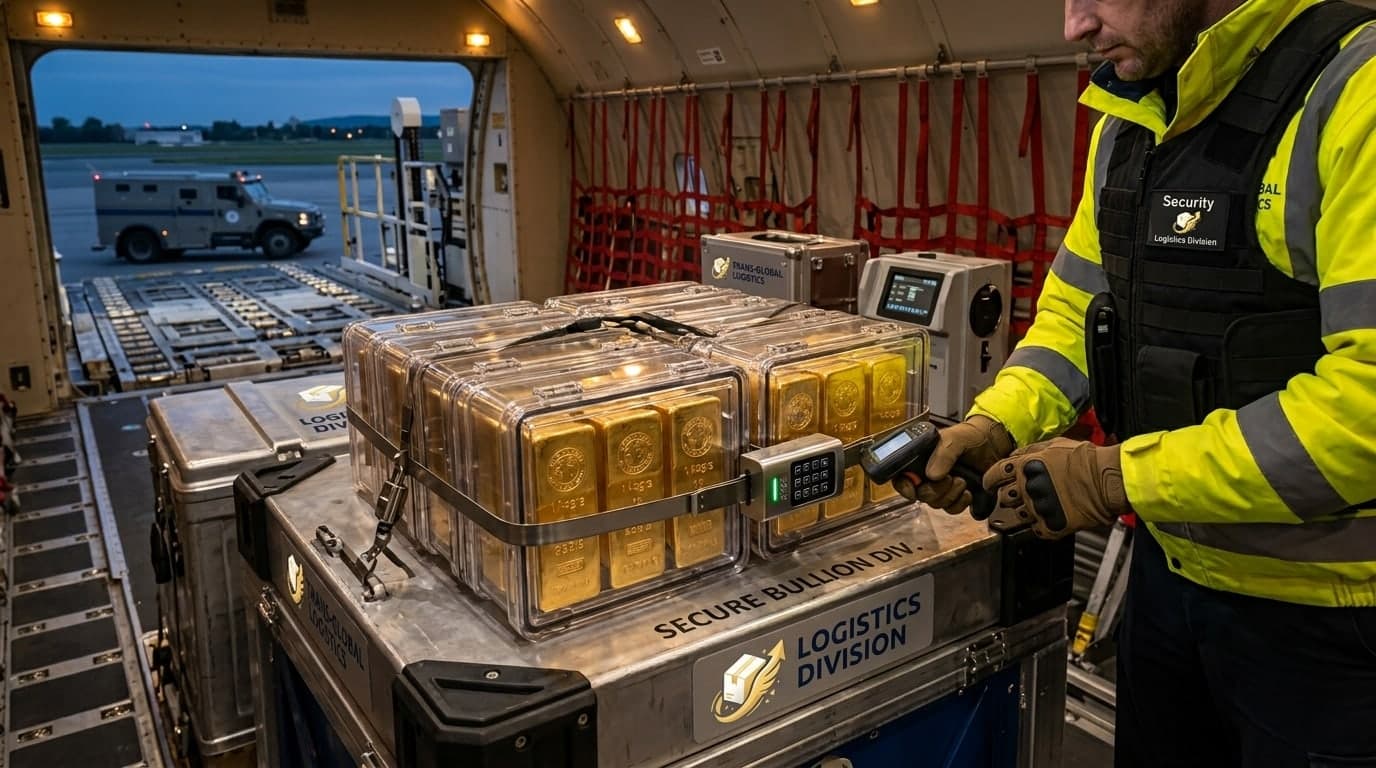
A bar keeps its Good Delivery status in practice only while it stays within a recognised chain of custody — moving between accredited vaults and approved carriers, with documentation at each step. A bar that has been taken home, or stored somewhere outside that chain, may need to be re-assayed before a buyer will accept it, even though nothing physical has changed.
The bar is the same. What changed is the evidence that it is still the same bar.
That is why we record every movement against the bar’s serial number and issue a waybill with a full bar manifest for each consignment. When the time comes to sell, the paperwork answers the buyer’s questions before they are asked.
Weights, fineness and fine ounces
Good Delivery bars vary in weight, so they are priced by fine content: gross weight multiplied by fineness. A 400.125-ounce bar at 995.0 contains about 398.124 fine ounces. Your certificates show both gross and fine weight for each bar, and your portal values your holding on fine content at the current spot price.
Not the only format
Kilobars and smaller cast or minted bars are widely traded too, particularly in Asian and Middle Eastern markets and for private investors. They carry their own accreditations and conventions. We store and move all common formats; the right one for you depends on how you expect to sell, and to whom.
How refiners stay on the list
Accreditation is not granted once and forgotten. Refiners on the Good Delivery List are subject to periodic proactive monitoring, which includes testing samples of their production against reference standards, reviewing their assaying capability and examining their sourcing practices. A refiner that falls short can be suspended or removed, and bars it produces after that date no longer qualify.
That is why a bar’s year of production and refiner name matter. A bar made by a refiner while it was accredited keeps its standing even if the refiner later leaves the list, but a buyer will want to see that the date and stamp tie up. Our bar records capture both, so the question can be answered from the certificate rather than by sending the bar for inspection.
Responsible sourcing
Over the past decade the standard has extended beyond the physical bar to where the gold came from. Accredited refiners must follow responsible-sourcing guidance designed to keep gold linked to conflict, money laundering or serious human-rights abuses out of the market, and they are audited against it each year. For owners this is mostly invisible, but it is one more reason why bars from listed refiners are easier to sell: the buyer is not taking on an unknown risk about the metal’s history.
When a bar leaves the system
Bars delivered to a private address, broken out of their sealed packaging or held without records for a period can still be perfectly genuine, but they may need to be re-assayed before a bank or dealer will accept them at full value. The cost is rarely large, yet it adds time and friction to a sale. If you think you may want to sell into the wholesale market one day, keeping the metal inside a documented chain of custody is usually the cheapest insurance against that friction.
This article is general information, not legal, tax or investment advice. Speak to a qualified adviser about your circumstances.
Keep reading
 Custody4 min read
Allocated or unallocated? What you actually own
Two accounts can show the same number of ounces and mean completely different things. Here is how to tell whether you own bars, or a promise.
Read more Logistics3 min read
Anatomy of a chain of custody
Every hand-over is a moment where a bar could be swapped, lost or simply undocumented. Here is how a disciplined chain of custody closes each gap.
Read more Insurance3 min read
How specie insurance really works
Carriers’ liability limits are tiny compared with the value of gold. Specie insurance fills the gap — if you understand what it covers and what it asks of you.
Read more